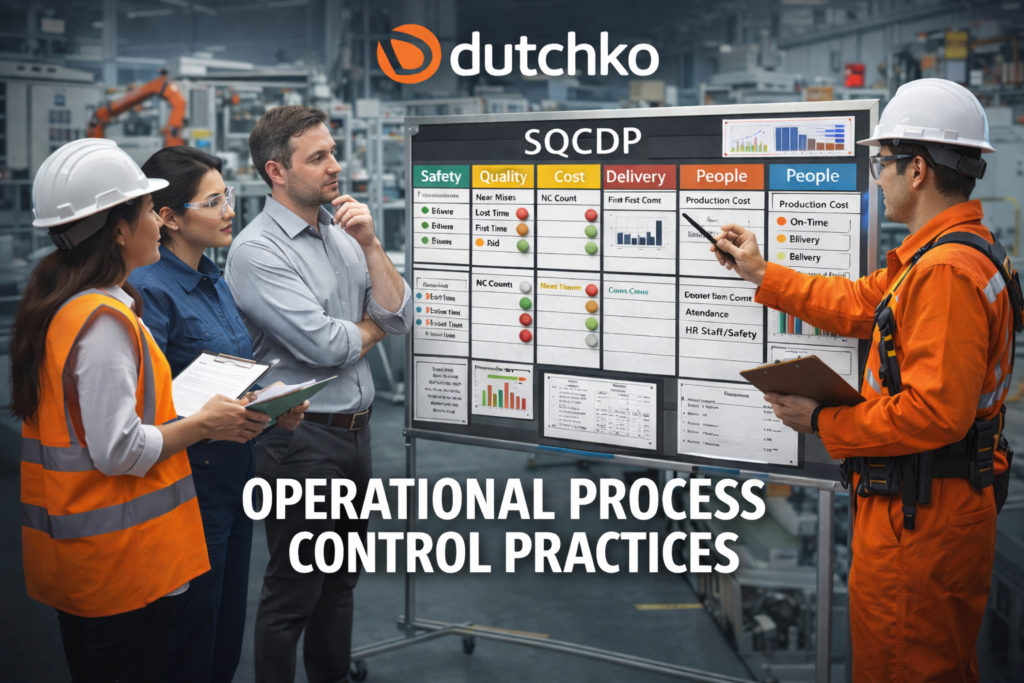
Operational Process Control Practices
- Establishing clear, standardized process control to ensure reliable and consistent operations.
- Defining and embedding robust ways of working that drive predictability and performance.
- Implementing transparent operating routines with clear roles, responsibilities, and escalation paths, communication structure (Tier meetings).
- Strengthening control through structured shift handovers, daily performance reviews, and exception management (SQCDP boards, KPI dashboards, RCA, best practice sharing, ..)
- Applying proven methodologies and tools for process monitoring, KPIs, and performance dashboards.
- Empowering the people at the point of execution to drive improvements.
- Driving the right behaviors to continuously improve stability, quality, and efficiency.
- Embedding real‑time decision‑making and data‑driven control into daily operations.
- Reducing variability and unplanned deviations through better process discipline and standardization.
- Enhancing management visibility with clear performance metrics and escalation protocols.
- Aligning management practices with operational realities through structured shop‑floor management and Gemba walks
- Strengthening frontline leadership and team accountability for daily performance.
- Building lasting capability through training, coaching, and structured process improvement cycles.
- Ensuring consistent application of control systems and standards across shifts, sites, and regions.